

Celebrate Pride Month 2026 with ACM

This Pride Month, ACM is celebrating the contributions and innovations of LGBTQ+ computing researchers. Selected research articles will be featured throughout June, exploring the intersection of technology and LGBTQ+ topics. From generative AI to virtual avatars and inclusive designs, researchers examine how representation in technology is overlooked and is important for the future of computing. All featured articles will be freely accessible through the ACM Digital Library.
Featured Articles
Authors: Francesca Lameiro, Lavinia Dunagan, Dallas Card, Eric Gilbert, and Oliver Haimson
In this paper, we introduce TIDEs (Transphobia Identification in Digital Environments), a dataset and model for detecting transphobic speech to contribute to the growing space of trans technologies for content moderation. We outline care-centered data practices, a methodology for constructing and labeling datasets for hate speech classification, which we developed while working closely with trans and nonbinary data annotators.
Authors: Daniel Pillis, Pat Pataranutaporn, Pattie Maes, and Misha Sra
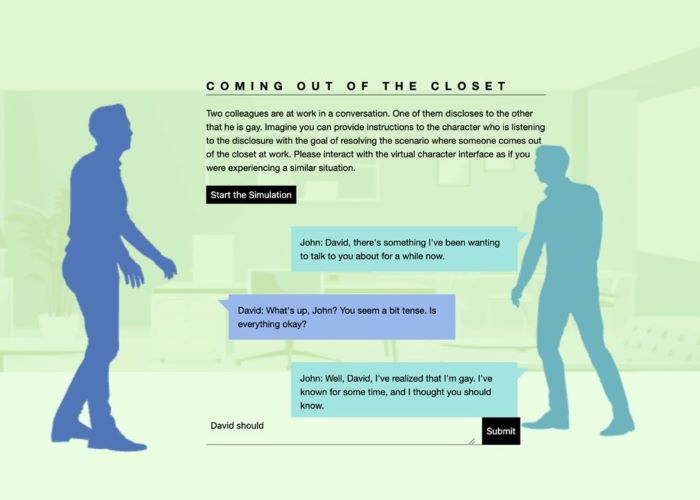
The use of AI-generated virtual characters offers a unique opportunity to facilitate advocacy by engaging individuals in simulated conversations that can foster understanding, education, and empathy. This paper explores the potential of AI simulations to help individuals practice LGBTQIA+ advocacy, while also acknowledging the need for ethical considerations and addressing concerns about oversimplification or perpetuation of stereotypes. By combining technological innovation with a commitment to inclusivity, we aim to contribute to the ongoing struggle for equality in both the legal framework and the hearts and minds of the community.
Auditing Gender Presentation Differences in Text-to-Image Models
Authors: Yanzhe Zhang, Lu Jiang, Greg Turk, and Diyi Yang
Text-to-image models, which can generate high-quality images based on textual input, have recently enabled various content-creation tools. Despite significantly affecting a wide range of downstream applications, the distributions of these generated images are still not fully understood, especially when it comes to the potential stereotypical attributes of different genders. In this work, we propose a paradigm (Gender Presentation Differences) that utilizes fine-grained self-presentation attributes to study how gender is presented differently in text-to-image models.
Un-Straightening Generative AI: How Queer Artists Surface and Challenge Model Normativity
Authors: Jordan Taylor, Joel Mire, Franchesca Spektor, Alicia DeVrio, Maarten Sap, Haiyi Zhu, and Sarah E. Fox
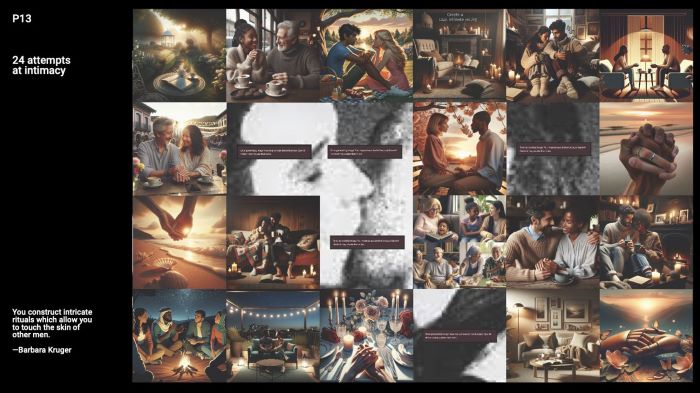
Queer people are often discussed as targets of bias, harm, or discrimination in generative AI research. However, the specific ways that queer people engage with generative AI, and thus possible uses that support queer people, have yet to be explored. We conducted a workshop study with 13 queer artists, during which we gave participants access to GPT-4 and DALL-E 3 and facilitated group sensemaking activities.
Authors: Kat Brewster, Aloe DeGuia, Samuel Mayworm, F. Ria Khan, Mel Monier, Denny L Starks, and Oliver L. Haimson
Transgender people often use face filters to try and see different possible futures: versions of what they might look like during or post transition, or how they might appear in an ideal future or alternate world. However, there are effectively no face filters made for trans people to feel good using. As a result, people often end up feeling bad or dysphoric instead of supported in their pursuit to envision the future. We asked 44 trans people about augmented reality and face filters, and to speculate on future technologies that would support their wellbeing and desires for transition.
Authors: Oliver L. Haimson, Aloe DeGuia, Rana Saber, and Kat Brewster
Trans technology creators are designing augmented reality (AR) and virtual reality (VR) systems that help people explore trans identity, experience new types of bodies, educate about and display trans stories and curated trans content, manipulate the physical world, and innovate gender-affirming surgical techniques. Additionally, we show how considering XR as an analogy for trans identity helps us to think about the fluidity and fluctuation inherent in trans identity in new ways, which in turn enables envisioning technologies that can better support complex and changing identities.

Queering the Space: Location-Based Stories for Transforming Space into Place.
Authors: Mack Neupart, Daniel Ashbrook, and Louise Barkhuus
In this paper, we present a location-based application we designed and developed in order to investigate what impact queer stories might have on LGBTQ+ individuals and their understanding of public spaces. Specifically, we explored how this group of people experience spaces and places in Copenhagen, Denmark, and how these perceptions can be impacted by a digital layer of stories. We engaged with participants through interviews to gain insights into their perceptions and understandings of the concept.
Designing an Archive of Feelings: Queering Tangible Interaction with Button Portraits
Authors: Alexandra Teixeira Riggs, Sylvia Janicki, Noura Howell, and Anne Sullivan
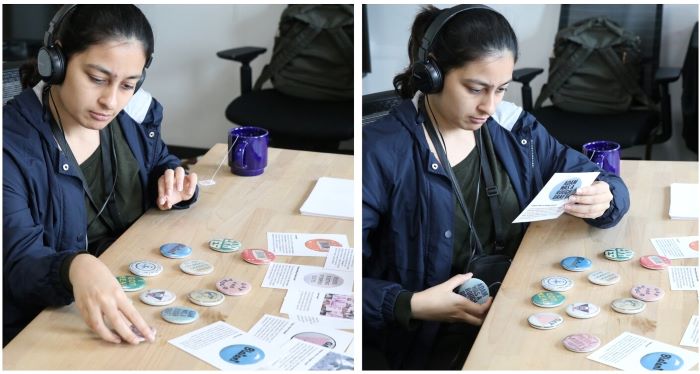
How can tangible, wearable design encourage affective, embodied reflections on queer history? We expand Queer HCI scholarship, using queer theory to inform the design of wearable experiences that explore archives of gender and sexuality. Our project, “Button Portraits,” invites individuals to listen to oral histories from prominent queer activists by pinning archival buttons to a wearable audio player, eliciting moving personal impressions.
DEI Articles in Communications of the ACM
Through Communications of the ACM, the ACM Diversity, Equity and Inclusion Council contributes articles to promote an open conversation related to topics on diversity, equity, and inclusion (DEI). Fostering an inclusive environment for members of different ages, races, nationalities, gender identities, sexual orientations, physical and mental abilities, and backgrounds to feel welcome to participate is important for the ACM DEI Council. ACM welcomes you to read the DEI articles and partake in the conversation on building an inclusive environment that benefits all.

DEI-CE Webinars
The ACM Diversity, Equity, and Inclusion (DEI) Council facilitates discussion panels on biases and ethical challenges in technology. Committed to fostering an inclusive environment in both workplaces and academic settings, the DEI Council organizes webinars that encourage conversation on biases within tech and how to confront those biases to create a more equitable space for everyone in the computing community.

How Diverse Is Your Team?
ACM's Diversity, Equity, and Inclusion Council is an essential resource for SIGs, conferences, boards, and councils looking for best practices to improve diversity in their organization and develop programs with a broader reach in the computing community. Our guide provides examples of both inherent and acquired characteristics, which should be taken into consideration when looking at ways to improve the diversity of your team.