
Call for Proposals: ACM Books
ACM Books is a series of academic and professional works authored by computer scientists and engineers at the forefront of computing technology. The series is comprehensive in its coverage of established and emerging computing fields, focusing on graduate-level textbooks, research monographs, practitioner-level professional books, transdisciplinary works, and books devoted to the history and social impact of computing. The program is noted for its attention to quality and its strong support of authors throughout the publication process. All books are made available in digital and print formats, with digital versions hosted on the ACM Digital Library .
Some of our notable published titles include:
- Edsger Wybe Dijkstra: His Life,Work, and Legacy, edited by Krzysztof R. Apt and Tony Hoare
- Pick, Click, Flick!: The Story of Interaction Techniques by Brad A. Myers
- Information Retrieval: Advanced Topics and Techniques, edited by Omar Alonso and Ricardo Baeza-Yates
- Effective Theories in Programming Practice by Jayadev Misra
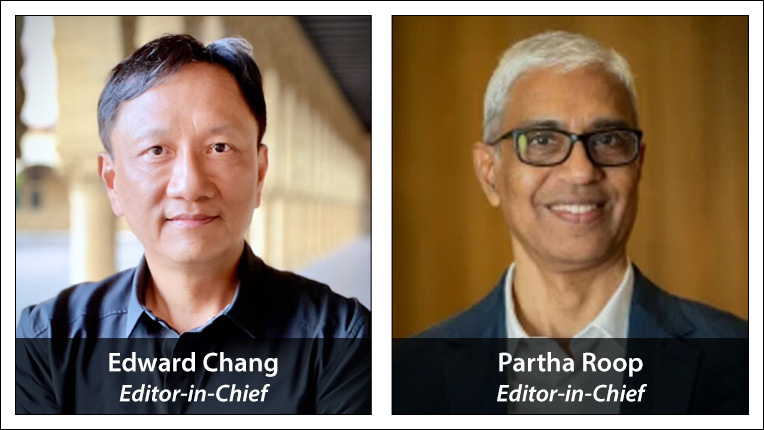
Editorial oversight of ACM Books is provided by an international editorial board composed of leading academic researchers and practitioners who represent the field's major areas of study. The board is led by Co-Editors-in-Chief Partha Roop (University of Auckland) and Edward Chang (Stanford University).
The Editors-in-Chief invite new book proposals of high quality and enduring value in all areas of computing. The series is selective: a small number of proposals are accepted each year, and every proposal is reviewed against the standards applied to the titles already in the series.
What we look for. Authors should have demonstrated expertise in the subject area, evidenced by a substantial record of peer-reviewed publication or comparable professional standing, and should be able to show the command of the field a book-length treatment requires. First-time book authors are welcome if their proposal meets these criteria. We seek works that will remain valuable over time, not summaries of the current moment.
What to submit. A complete proposal includes: a statement of the book's thesis, scope, and intended readership; an annotated table of contents; at least one complete sample chapter in near-final form; an assessment of competing and complementary books and what distinguishes yours; the curriculum vitae or publication record of each author; and a realistic writing schedule with a target manuscript-delivery date. Proposals missing a sample chapter or a delivery schedule will not be reviewed.
Outside our scope. Lightly revised dissertations; collections of previously published papers without substantial new synthesis; literature surveys without an original organizing argument; and books aimed at a general trade readership.
Process and expectations. Proposals are screened by the Editors-in-Chief, and those passing initial review are evaluated by the editorial board with external referees as appropriate. Accepted projects carry a firm manuscript delivery schedule; authors who cannot commit to a timeline should defer submission until they can. Authors may submit their proposals via the ACM Books proposal form or by email to [email protected] (using the same headings as in the proposal form).
For more information, please write to Sean Pidgeon, ACM Executive Editor, at [email protected].
-
ACM Books Editorial Board
- Co-Editors-in-Chief
- Edward Y. Chang
- Partha Roop
- Editorial Board Members
- Samik Basu
- Michel Beaudouin-Lafon
- Charles Clarke
- Véronique Cortier
- Andreas Kempa-Liehr
- Y. Annie Liu
- Shixia Liu
- Meena Mahajan
- Thomas J. Misa
- Manoranjan Mohanty
- Mohamed F. Mokbel
- Seffi Naor
- Tobias Nipkow
- Hammond Pearce
- Roopak Sinha
- Jean-Pierre Talpin
- Limsoon Wong
- Naijun Zhan
Co-Editors-in-Chief - ACM Books
Editorial oversight of ACM Books is provided by an international editorial board composed of leading academic researchers and practitioners who represent the field's major areas of study. The board is led by Co-Editors-in-Chief Partha Roop (University of Auckland) and Edward Chang (Stanford University).